The mistake is to compare LongCat-Video and LongCat Avatar 1.5 as if they are two versions of the same product. They are not. This LongCat-Video vs LongCat Avatar 1.5 article is a real LongCat Avatar 1.5 comparison against LongCat-Video, built from local outputs rather than a spec-sheet summary. LongCat-Video is the model I would reach for when the input is a visual idea and the output should be a scene. Avatar 1.5 is the model I would reach for when the input is a person and a voice, and the output should feel like a performance. The connection matters because Avatar 1.5 sits inside the LongCat-Video ecosystem, but the reader decision is much simpler: scene engine or performance engine.
If you came from the LongCat-Video review, this comparison is the practical follow-up: it explains why the same model family can feel like two different production tools once the input changes from prompts to people and audio.
This comparison is based on twenty-seven local outputs: sixteen LongCat-Video text-to-video clips and eleven LongCat Avatar 1.5 audio-image-to-video clips, including continuous 20-second presenter, singing, story-style, product-pitch, news-anchor, teacher, customer-support, keynote, two-host, studio-duet, and roundtable-dialogue avatar samples. The difference is visible in the outputs, but it becomes even clearer in the metrics: LongCat-Video spends its budget on prompt-driven visual generation, while Avatar 1.5 spends much more time on audio-conditioned identity-preserving performance.
My fast decision rule is blunt. If the creative brief starts with a place, object, camera move, lighting idea, or cinematic scene, I would start with LongCat-Video. If the brief starts with a person, a voice, a host, a singer, a customer-support agent, or a two-person dialogue, I would start with Avatar 1.5. The names are similar, but the emotional promise is different. LongCat-Video asks, "Can I create a world from words?" Avatar 1.5 asks, "Can I make this person perform believably from audio?" That difference is what makes the comparison useful.
Quick Reader Guide
If you want to know... | Start here | What you will find |
|---|---|---|
The short answer | Capability Map | The scene-engine vs performance-engine decision rule |
What evidence supports the comparison | Shared Evidence and Generated Works Table | Frames, playable outputs, and 27 file-level test records |
Which model is heavier | Runtime Comparison and Hardware and Setup Tradeoffs | VRAM, runtime, preprocessing, and deployment differences |
How the two models are technically connected | How They Are Connected | Shared LongCat-Video foundation pieces and Avatar-specific components |
How they compare with outside alternatives | External Model Context | Wan, HunyuanVideo, InfiniteTalk, HeyGen/Kling, Runway, and Seedance as reference points |
Which one to use | Decision Matrix and Final Recommendation | Practical selection by input type and product goal |
Use this LongCat-Video vs LongCat Avatar 1.5 comparison as the bridge between the LongCat-Video review and the LongCat Avatar 1.5 comparison evidence. The repeated question is simple: when a project says it needs LongCat-Video, does it really need a scene-generation video model, or does it need Avatar 1.5 as an audio-driven avatar performance model?
Capability Map
Question | LongCat-Video | LongCat Avatar 1.5 | Practical answer |
|---|---|---|---|
What is the input? | Text prompt, or image/video in other official modes | Reference image, audio, and prompt | Choose by input first, not by model name |
What is the output supposed to feel like? | A generated scene or camera shot | A person-like performance | Scene engine vs performance engine |
Which official abilities matter most? | T2V, I2V, continuation, long-video generation, efficient high-resolution inference | Lip sync, identity consistency, singing, animation, multi-person interaction, 8-step distillation | They solve different user problems |
What did my local test prove? | 16 real 480p prompt-driven clips with stable memory | 11 real 20-second voiced avatar clips with complete audio | Both work locally, but the runtime shape is very different |
LongCat-Video vs Avatar 1.5 runtime and VRAM chart
The chart is the fastest way to understand the practical difference. Both paths live around the same 41GB-class memory band in my setup, but Avatar 1.5 takes far longer because it is solving a harder product problem: not just making frames, but making a reference person respond to sound over time.
Shared Evidence
The shared evidence is now shown as a comparison table instead of a collage and a long sequence of standalone media blocks. Each row pairs the actual frame and playable MP4 with the reason that sample matters for choosing between the two models.
Editor's note: image alt text below identifies both the model and scene, which helps distinguish near-identical filenames in image search and supports VideoObject structured data if implemented on a CMS.
Model | Sample | Frame | Playable output | Why it matters |
|---|---|---|---|---|
LongCat-Video | Neon market |  | General prompt-only scene generation with lighting, reflections, and atmosphere. | |
LongCat Avatar 1.5 | Female singing | 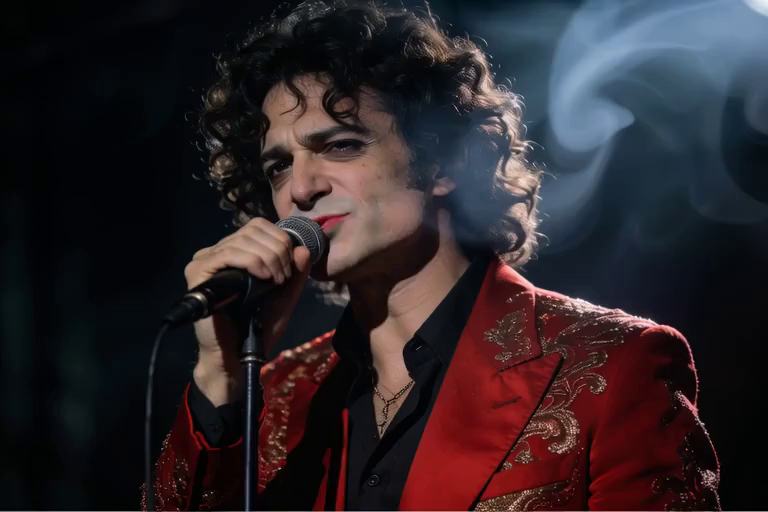 | Audio-driven singing-avatar evidence with official vocal input. | |
LongCat-Video | Warehouse robot | 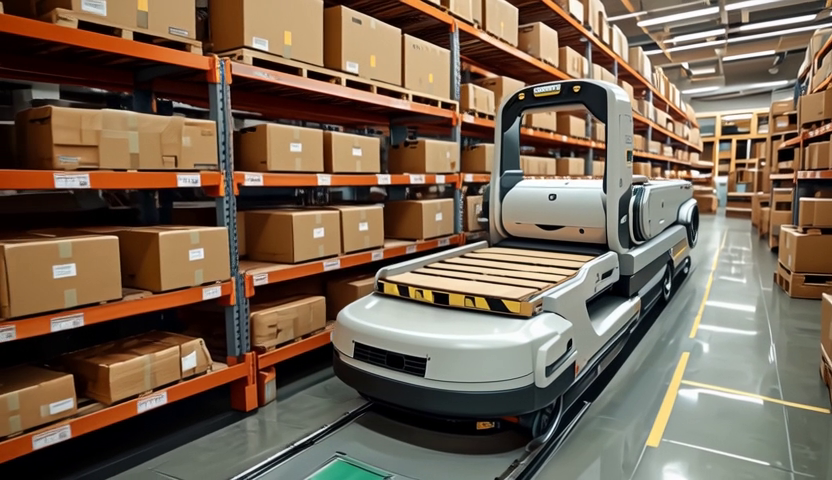 | Prompt-only subject motion and industrial camera direction. | |
LongCat Avatar 1.5 | Presenter speech | 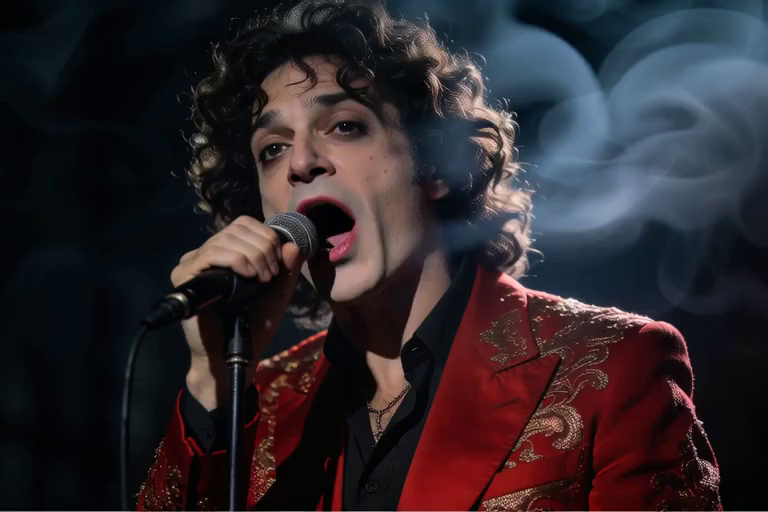 | Talking-avatar baseline with reference image plus speech audio. | |
LongCat-Video | Perfume macro |  | Product-style text-to-video behavior and macro commercial framing. | |
LongCat Avatar 1.5 | Product pitch | 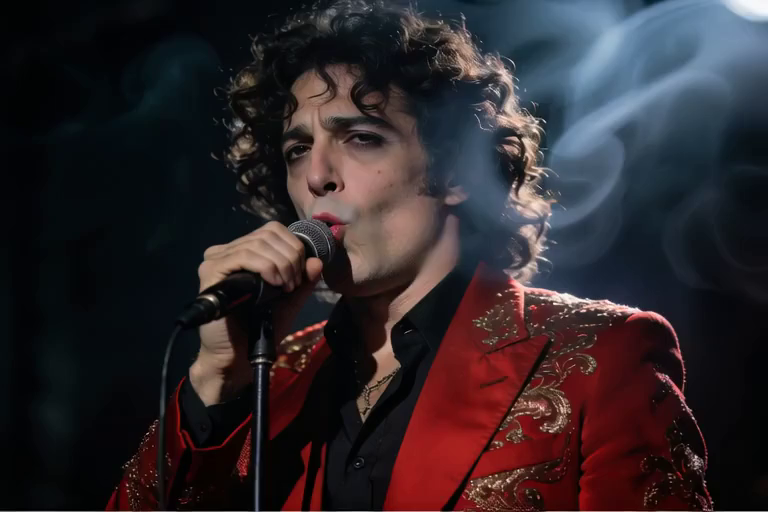 | Product-presenter avatar use case with speech audio and prompt direction. | |
LongCat Avatar 1.5 | Studio duet | 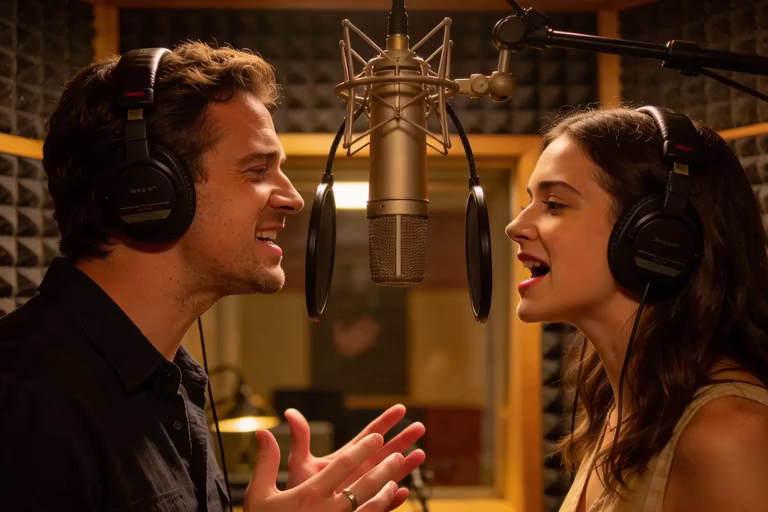 | Multi-person singing-avatar test with two visible performers. | |
LongCat Avatar 1.5 | Two-host intro |  | Multi-person speaking evidence with two audio inputs. | |
LongCat Avatar 1.5 | Roundtable dialogue |  | Sequential multi-audio conversation evidence for the documented multi-person use case. |
The Core Difference
LongCat-Video takes a text prompt and generates video frames. It is the broader model. It handles scenes, landscapes, lighting, motion, and general visual composition. My tests used a night street market, a mountain drone shot, a warehouse robot motion prompt, and a product turntable prompt. Those outputs showed the intended foundation behavior: text controls the generated world.
LongCat Avatar 1.5 takes a reference image, speech or singing audio, and a prompt. The prompt still matters, but it does not have the same freedom as general text-to-video because the pipeline must preserve the person and follow the audio. It adds vocal separation, Whisper-Large-v3 audio features, an avatar-specific DiT, and LoRA. My tests used presenter, singer, news-anchor, teacher, support-host, keynote, two-host, and duet prompts.
The multi-person tests are part of the model's documented target use, not an accidental stretch. The official project page highlights Multi-Person Interaction, and the official Hugging Face card describes both multi-stream audio input and multi-person conversation scenarios. That is why I kept both a two-host sample and a roundtable dialogue sample in the Avatar evidence set.
The easiest way to understand the difference is to look at what each model is responsible for inventing. LongCat-Video has to invent the whole shot: the subject, environment, motion, lighting, and camera feel. Avatar 1.5 does not invent the person from scratch. It starts from an image, listens to speech, and generates a performance that should stay connected to that identity. That makes Avatar 1.5 more constrained, but also more directly useful for talking-person workflows.
This also changes how prompt quality should be judged. A strong LongCat-Video prompt gives the model a complete visual direction. It should mention the location, lighting, movement, mood, and main subject. A strong Avatar 1.5 prompt should support the reference image and performance. It should describe context, tone, and presentation style without asking the model to become a different person. If a user writes prompts for both models in exactly the same way, they will misunderstand one of them.
How I Interpreted the Outputs
For LongCat-Video, I looked for scene coherence across several prompt types. In the neon market sample, the useful signs were wet pavement, light reflections, night mood, and the sense of an urban environment. In the mountain sample, the useful signs were open landscape composition, sunrise color, and aerial camera intent. The warehouse and product samples added subject motion and object-focused framing. Together they show that the foundation model can turn visual text into video frames across more than one scene type.
For Avatar 1.5, I looked at a different set of questions. Did the reference character remain central? Did the video export with audio? Did the audio preprocessing complete? Did the model accept a second prompt style while using the same reference image and speech? Did the INT8 model stay inside memory limits? Those are avatar questions, not general video questions.
That distinction is important for readers. A foundation video model can look more visually flexible because it is inventing everything. An avatar model can look less flexible because it is preserving identity and following speech. The restriction is not necessarily a weakness. It is the point of the model.
Runtime Comparison
Summary: Both models operate in the same 41GB-class VRAM band, but LongCat-Video finishes a clip in under two minutes, while Avatar 1.5 needs roughly 19–21 minutes per 20-second output because it carries a heavier audio-conditioning pipeline.
Model | Test path | Frames | Steps | Peak CUDA memory | Typical total time in my test |
|---|---|---|---|---|---|
LongCat-Video | 480p T2V distill | 45 | 8 | ~41.6 GB | ~85-87s |
LongCat-Video | 480p T2V distill | 61 | 8 | ~41.7 GB | ~114-121s |
LongCat-Video | 480p expanded T2V distill | 61 | 8 | 41.645 GB | ~111-120s |
LongCat Avatar 1.5 | 480p AI2V INT8 20-second presenter, official continuation | 573 raw, 20s trim | 8 per segment | 41.304 GB | 1159s |
LongCat Avatar 1.5 | 480p AI2V INT8 20-second female singing, official continuation | 573 raw, 20s trim | 8 per segment | 41.382 GB | 1142s |
LongCat Avatar 1.5 | 480p multi-person INT8 20-second studio duet, official continuation | 573 raw, 20s trim | 8 per segment | 41.382 GB | 1209s |
LongCat Avatar 1.5 | 480p AI2V INT8 added single-person 20-second speech tests, official continuation | 573 raw, 20s trim | 8 per segment | 41.382 GB | 1144s each |
LongCat Avatar 1.5 | 480p multi-person INT8 20-second two-host intro, official continuation | 573 raw, 20s trim | 8 per segment | 41.462 GB | 1240s |
LongCat Avatar 1.5 | 480p multi-person INT8 20-second roundtable dialogue, official continuation | 573 raw, 20s trim | 8 per segment | 41.462 GB | 1233s |
Avatar 1.5 used about 41.3 to 41.5 GB peak sampled GPU memory for the 20-second audio-driven outputs in my tests. It took longer overall because the pipeline does more work before and during generation: vocal separation, audio embedding, reference image conditioning, continuation, and audio-video muxing. LongCat-Video was faster in the tested prompt-to-video paths because it does not have the audio stack.
Generated Works Table
Model | Output file | Input type | Best evidence from the run |
|---|---|---|---|
LongCat-Video |
| Text prompt only | General scene generation with urban night lighting, reflections, and handheld camera intent |
LongCat-Video |
| Text prompt only | Landscape generation with sunrise lighting, aerial camera direction, and broad scene composition |
LongCat-Video |
| Text prompt only | Subject motion and a longer 4.07-second industrial scene |
LongCat-Video |
| Text prompt only | Product-shot prompt behavior with controlled lighting and turntable motion |
LongCat Avatar 1.5 |
| Reference image plus 20 seconds of speech audio plus prompt, generated with official continuation | Main talking-avatar evidence: audible speech, longer mouth-motion window, and identity-conditioned performance |
LongCat Avatar 1.5 |
| Reference image plus 20 seconds of official female singing audio plus prompt, generated with official continuation | Singing-avatar evidence with official vocal input, performance prompt, and a longer observation window |
LongCat Avatar 1.5 |
| Two-person reference image plus 20 seconds of clean vocal audio plus prompt, generated with official continuation | Multi-person studio duet evidence with two visible performers, audible vocal input, and a longer observation window |
LongCat Avatar 1.5 |
| Two-person reference image plus two 20-second speech tracks plus prompt, generated with official continuation | Multi-person speaking evidence with two audio inputs, 20.0s video/audio, and no long silence |
LongCat Avatar 1.5 |
| Two-person reference image plus two 10-second speech turns plus prompt, generated with official continuation | Multi-person conversation evidence with sequential turn-taking, 20.0s video/audio, and one natural handoff pause |
Expanded 27-Output Evidence Matrix
Model | Output file | Input type | Best evidence from the run |
|---|---|---|---|
LongCat-Video |
| Text prompt only | fashion movement, rain reflections, and editorial lighting; 61 frames, 4.07s, 120.101s total, 41.645 GB peak CUDA |
LongCat-Video |
| Text prompt only | stage mood, warm spotlights, singer silhouette, and club atmosphere; 61 frames, 4.07s, 114.148s total, 41.645 GB peak CUDA |
LongCat-Video |
| Text prompt only | macro product framing, water droplets, and premium commercial lighting; 61 frames, 4.07s, 112.394s total, 41.645 GB peak CUDA |
LongCat-Video |
| Text prompt only | food motion, flame, steam, sparks, and handheld energy; 61 frames, 4.07s, 111.727s total, 41.645 GB peak CUDA |
LongCat-Video |
| Text prompt only | interior glass reflections, aurora motion, and calm cinematic travel mood; 61 frames, 4.07s, 111.027s total, 41.645 GB peak CUDA |
LongCat-Video |
| Text prompt only | vehicle action, dust plume, sunset color, and tracking-camera intent; 61 frames, 4.07s, 111.027s total, 41.645 GB peak CUDA |
LongCat-Video |
| Text prompt only | robot action, steam, cafe environment, and lifestyle sci-fi framing; 61 frames, 4.07s, 110.913s total, 41.645 GB peak CUDA |
LongCat-Video |
| Text prompt only | human dance motion, rain splash, neon lighting, and rooftop background; 61 frames, 4.07s, 111.293s total, 41.645 GB peak CUDA |
LongCat-Video |
| Text prompt only | blue caustic lighting, gallery depth, visitors, and sci-fi atmosphere; 61 frames, 4.07s, 111.131s total, 41.645 GB peak CUDA |
LongCat-Video |
| Text prompt only | greenhouse interior, astronaut subject, Earth window, and slow camera drift; 61 frames, 4.07s, 111.031s total, 41.645 GB peak CUDA |
LongCat-Video |
| Text prompt only | sports acceleration, water droplets, stadium lighting, and low-angle drama; 61 frames, 4.07s, 111.054s total, 41.645 GB peak CUDA |
LongCat-Video |
| Text prompt only | immersive LEDs, polished-floor reflections, and art-film camera glide; 61 frames, 4.07s, 111.139s total, 41.645 GB peak CUDA |
LongCat Avatar 1.5 |
| Reference image plus 20 seconds of clean voiced audio plus prompt, generated with official continuation | Story-style vocal performance; checked as 20.0s video / 20.0s audio with no 0.5s silence hits at -35 dB |
LongCat Avatar 1.5 |
| Reference image plus 20 seconds of clean voiced audio plus prompt, generated with official continuation | Product-pitch vocal performance; checked as 20.0s video / 20.0s audio with no 0.5s silence hits at -35 dB |
LongCat Avatar 1.5 |
| Two-person reference image plus 20 seconds of clean vocal audio plus prompt, generated with official continuation | Studio duet performance; checked as 20.0s video / 20.0s audio with no 0.5s silence hits at -35 dB |
LongCat Avatar 1.5 |
| Reference image plus 20 seconds of speech audio plus prompt, generated with official continuation | Presenter speech; checked as 20.0s video / 20.0s audio with complete audio stream |
LongCat Avatar 1.5 |
| Reference image plus 20 seconds of official female singing audio plus prompt, generated with official continuation | Singing performance; checked as 20.0s video / 20.0s audio with no 0.5s silence hits at -35 dB |
LongCat Avatar 1.5 |
| Reference image plus 20 seconds of spoken audio plus newsroom prompt, generated with official continuation | News-anchor delivery; checked as 20.0s video / 20.0s audio with no 0.5s silence hits at -35 dB |
LongCat Avatar 1.5 |
| Reference image plus 20 seconds of spoken audio plus teacher prompt, generated with official continuation | Teacher/explainer delivery; checked as 20.0s video / 20.0s audio with no 0.5s silence hits at -35 dB |
LongCat Avatar 1.5 |
| Reference image plus 20 seconds of spoken audio plus support-host prompt, generated with official continuation | Customer-support host delivery; checked as 20.0s video / 20.0s audio with no 0.5s silence hits at -35 dB |
LongCat Avatar 1.5 |
| Reference image plus 20 seconds of spoken audio plus keynote prompt, generated with official continuation | Keynote storytelling delivery; checked as 20.0s video / 20.0s audio with no 0.5s silence hits at -35 dB |
LongCat Avatar 1.5 |
| Two-person reference image plus two 20-second audio tracks plus prompt, generated with official continuation | Two-host introduction; checked as 20.0s video / 20.0s audio with no 0.5s silence hits at -35 dB |
LongCat Avatar 1.5 |
| Two-person reference image plus two 10-second speech turns plus prompt, generated with official continuation | Roundtable dialogue; checked as 20.0s video / 20.0s audio with one 1.1s speaker-handoff pause at -35 dB |
This expanded matrix matters because it separates visual variety from audio-driven avatar performance. LongCat-Video now has enough prompt directions to judge scene appeal, while Avatar 1.5 has enough 20-second voiced clips to judge whether audio remains part of the final product instead of being an afterthought.
This table is important because the two models cannot be compared fairly from a single output. LongCat-Video should be given a broad visual scene set, and Avatar 1.5 should be given multiple long enough voiced clips to hear the result and inspect face motion. The generated works also show the input difference more clearly than a feature list: LongCat-Video starts from text; Avatar 1.5 starts from a person image and speech or singing audio, then uses text as performance direction.
Raw metrics for all 27 outputs (JSON logs, timing data, and audio validation results) are available on request — see the Reproducibility notes below for the two source reviews these numbers were pulled from.
How They Are Connected
The connection is technical and practical. Avatar 1.5 uses the LongCat-Video repository and also depends on the foundation checkpoint for tokenizer, text encoder, and VAE. The Avatar 1.5 model then adds its own scheduler, INT8 or full precision avatar DiT, DMD LoRA, Whisper audio model, and vocal separator.
That means you should not think of Avatar 1.5 as a tiny standalone model. It is a specialized branch of the LongCat-Video ecosystem. You still need the foundation pieces, and setup complexity remains real.
That connection changes how the models should be understood. LongCat-Video is the technical base that explains where the visual generation capability comes from. Avatar 1.5 is the applied branch that turns the ecosystem toward audio-driven character video. If someone only looks at Avatar 1.5, the foundation checkpoint dependency can feel surprising. If someone only looks at LongCat-Video, the need for Whisper, vocal separation, and reference-image conditioning may be invisible. The two models make the most sense when their dependency relationship is clear.
In my local setup, this relationship was visible in the scripts. The Avatar 1.5 script loaded tokenizer, text encoder, and VAE from the LongCat-Video checkpoint, while its own checkpoint supplied the avatar DiT, scheduler, DMD LoRA, Whisper model, and vocal separator. This is not just a naming relationship; it is a runtime dependency.
Hardware and Setup Tradeoffs
The hardware story is different for each model. LongCat-Video foundation T2V peaked at about 41.6 GB CUDA memory in both 45-frame and 61-frame 480p tests. Avatar 1.5 INT8 peaked at about 41.3 to 41.5 GB for the tested 20-second official-continuation outputs. In practice, Avatar 1.5 had more preprocessing and took longer end to end.
That is the tradeoff: LongCat-Video uses more peak memory in the tested T2V path, but the run is conceptually simpler. Text goes in, video comes out. Avatar 1.5 uses an INT8 model that reduced memory, but it also performs vocal separation, audio feature extraction, image conditioning, and audio-video muxing. The pipeline is more specialized and therefore more layered.
For a developer planning deployment, the right question is not only "which one fits in memory?" It is "which pipeline can I operate reliably?" LongCat-Video needs a strong CUDA/video generation environment. Avatar 1.5 needs that plus audio preprocessing. If an application needs many quick avatar generations, audio caching and preprocessing optimization may matter as much as denoising speed.
Product Positioning
LongCat-Video should be positioned as a foundation or developer model. Its value is breadth. It can support different video tasks and can act as a baseline for testing the LongCat ecosystem. The important questions are hardware needs, installation friction, prompt behavior, and the kind of short scene generation it can produce.
LongCat Avatar 1.5 should be positioned as the user-facing avatar model. Its value is focus. It is easier to explain to creators because the input-output relationship is concrete: provide a reference image and audio, then generate a speaking or singing character clip. The important questions are audio-driven generation, identity preservation, reference image quality, preprocessing, and INT8 practicality.
The comparison prevents a common misunderstanding: people may assume that because both models share the LongCat name, they do the same job. They do not. They share components and ecosystem logic, but they solve different user problems.
External Model Context
Reference model or product | Closest LongCat-side comparison | Why it matters | Practical reading |
|---|---|---|---|
Wan2.1 / Wan2.2 | LongCat-Video | Wan is a natural open-model reference for local video generation and community workflows | Compare it with LongCat-Video when the question is local T2V/I2V practicality, hardware, and ecosystem support |
HunyuanVideo / HunyuanVideo 1.5 | LongCat-Video | HunyuanVideo is another broad open video foundation-model family with multi-task ambitions | Use it as a research-scale comparison for model breadth and local deployment expectations |
Runway / Seedance-style hosted video tools | LongCat-Video | Hosted systems compete on polish, UX, and fast creative iteration rather than open local reproducibility | They are quality and convenience references, but not deployment equivalents to LongCat-Video |
InfiniteTalk | LongCat Avatar 1.5 | InfiniteTalk is closer to source-video dubbing and long-sequence audio-driven human motion | Compare it with Avatar 1.5 when the question is whether the input is a source video or only a reference image plus audio |
HeyGen / Kling Avatar-style products | LongCat Avatar 1.5 | Hosted avatar tools package avatar creation, voice, template UX, and export into a product workflow | They are better for non-technical production; Avatar 1.5 is better for local inspection and open-model evaluation |
OmniHuman-style research | LongCat Avatar 1.5 | OmniHuman is a quality reference for audio-driven human animation across different body framings | It is useful as a research benchmark direction, while Avatar 1.5 is what I could run and measure locally |
This outside context makes the LongCat split easier to understand. LongCat-Video belongs in the same decision bucket as open and hosted scene-generation models. LongCat Avatar 1.5 belongs in the avatar, dubbing, and human-performance bucket. A user comparing LongCat-Video directly against HeyGen is asking the wrong question; a user comparing Avatar 1.5 directly against Wan is also asking the wrong question.
The strongest reason to keep both LongCat models in one comparison is that they share an ecosystem but not a job. LongCat-Video explains the foundation-video side; Avatar 1.5 explains the audio-conditioned human-performance side. Competitors make that distinction clearer: Wan and HunyuanVideo help judge the foundation model, while InfiniteTalk, HeyGen, Kling Avatar, and OmniHuman help judge the avatar model.
Quality Criteria by Model
A LongCat-Video output should be judged by scene-level criteria. Is the environment coherent? Does the camera motion feel plausible? Does the lighting match the prompt? Are objects stable enough for the clip length? Does the style match the requested direction? If a scene has a person, is that person part of the composition rather than the whole task?
An Avatar 1.5 output should be judged by character-level and audio-level criteria. Does the face remain stable? Does the mouth move plausibly with speech? Does the body motion support the performance? Does the generated clip preserve the reference identity? Does the prompt enhance the role without breaking the image? Is the audio correctly included in the final video?
Those separate criteria are why direct visual comparison can be misleading. A general video clip may look more dynamic. An avatar clip may look more constrained. The avatar clip can still be the better output if the task is talking-person generation.
How I Would Use Them Together
I would not treat these two models as rivals inside the same workflow. I would use LongCat-Video when I need a visual world: a product shot, a stylized scene, a motion idea, or a prompt-driven experiment. I would use Avatar 1.5 when I already have a person-like subject and audio, and the goal is to make that subject deliver a performance.
The practical pairing is straightforward. LongCat-Video helps explain the foundation capability and gives technical teams a way to test general video generation. Avatar 1.5 turns that ecosystem toward a narrower but more product-ready job: speech, singing, identity, and interaction. Together they form a useful stack, but only if the user keeps the task boundary clear.
Risks of Mixing the Two
The first risk is expectation mismatch. A user looking for a talking avatar may read about LongCat-Video and expect audio-driven identity preservation. That would be wrong. LongCat-Video is not the model I would choose for lip sync or voice-driven performance.
The second risk is setup confusion. A user downloading Avatar 1.5 may not understand why LongCat-Video foundation files are still needed. Without that dependency in mind, setup can feel broken even when the dependency is intentional.
The third risk is weak benchmarking. Comparing the two models as if they perform the same task would be unfair. LongCat-Video should be compared with general video models. Avatar 1.5 should be compared with avatar and talking-head systems. The relationship section can mention shared components, but the performance comparison should follow the actual task.
My Practical Takeaway
After running both, I see LongCat-Video as the base layer and Avatar 1.5 as the applied layer. LongCat-Video proves the ecosystem can generate general video from text. Avatar 1.5 proves the ecosystem can specialize that capability for audio-driven people. Both are valuable, but Avatar 1.5 is the model that maps more directly to talking-person and singing-person workflows.
If a team has limited time, I would test Avatar 1.5 first because it maps directly to the product use case. I would still keep LongCat-Video installed because the foundation checkpoint is part of the runtime story and because general T2V tests help explain the broader model family.
Scenario-Based Recommendations
For a developer building a general AI video sandbox, LongCat-Video is the right starting point. It exposes the foundation video model and lets the developer test prompt-to-video behavior directly. The main work is environment setup, model loading, attention backend selection, and output evaluation. This scenario cares about prompt breadth, camera motion, scene variety, and integration with other video tooling.
For a developer building a talking avatar product, LongCat Avatar 1.5 is the better starting point. The workflow already expects a reference image and speech audio, which matches product needs much more closely. This scenario cares about audio alignment, mouth motion, identity preservation, reference-image quality, voice timing, and whether the output feels usable as a presenter or character clip.
For a content team that only wants fast social videos, neither local path is the easiest option. A hosted product may be more practical. The value of these LongCat models is strongest when the team needs local testing, model control, custom integration, or open-model evaluation.
For a research team comparing model families, both are worth testing. LongCat-Video belongs in a general video generation comparison. LongCat Avatar 1.5 belongs in an avatar or talking-head comparison. Mixing those categories will produce confusing conclusions.
Deployment Implications
The deployment implication is different for each model. LongCat-Video mainly asks for a stable video generation worker: large model files, a compatible attention backend, enough VRAM, and a queue that prevents concurrent jobs from overfilling the GPU. The input path is simple because the user mainly submits text and generation settings. The operational burden sits in model loading, memory planning, and video output handling.
Avatar 1.5 needs a broader service boundary. It has all of the foundation-model concerns, but it also accepts user images and audio. That means upload handling, audio decoding, vocal separation, Whisper feature extraction, image preprocessing, consent policy, and audio-video muxing. The GPU peak may be lower in the INT8 test, but the product system is more complex because the user inputs are more sensitive and more varied.
For a real avatar product, this matters. A lower peak VRAM number does not automatically mean an easier product. Avatar 1.5 also has to manage reference-image quality, voice permission, audio length, preprocessing time, and final audio-video muxing. LongCat-Video is operationally simpler because the input is mostly text and generation settings; Avatar 1.5 is more product-specific because the inputs are more sensitive and the output has to feel like a person performing.
This is why I would not judge the two by a single score. LongCat-Video should be judged by prompt control, motion, camera feel, visual coherence, and hardware cost. Avatar 1.5 should also be judged by consent, source media quality, lip motion, identity stability, and whether audio remains correctly attached to the final MP4. Those are not minor details; they are the difference between a general video model and an avatar system.
Decision Experience
The biggest risk is naming confusion. "LongCat-Video" sounds like it could include every video use case, while "LongCat Avatar 1.5" sounds like a versioned product page. The input and output make the decision much clearer. LongCat-Video is prompt to video. Avatar 1.5 is image plus audio plus prompt to avatar video.
Neither model should be framed as a clean replacement for the other. Avatar 1.5 depends on the ecosystem but narrows the task. LongCat-Video is broader but does not solve the avatar-specific problem by itself. The useful decision is not "which model is better?" but "which input do I have, and what kind of output do I need?"
The evidence points to a simple rule: start from the job. If the job is a cinematic shot, scene exploration, or general video prompt, LongCat-Video is the more natural choice. If the job is a speaking presenter, singing character, customer-support host, two-person intro, or dialogue scene, Avatar 1.5 is the more natural choice.
Safety and Misuse Differences
Both models create synthetic video, but the risk profile is different. LongCat-Video can create plausible scenes that did not happen. Avatar 1.5 can animate a person-like identity with speech. The Avatar model therefore needs stronger consent language when used with real people, because it can make a viewer feel that a specific person is speaking.
For general LongCat-Video outputs, disclosure and context are the main concerns. For Avatar 1.5 outputs, permission for the image and voice is equally important. The safety bar should be higher for avatar workflows because the output can feel like a specific person speaking. Any team deploying Avatar 1.5 in a public-facing product should build in consent checkboxes, output labeling, and retention limits for uploaded images and audio before launch — not as a follow-up task.
Final Decision
If the goal is a talking or singing avatar workflow, I would choose LongCat Avatar 1.5 first. It maps directly to the job: make a person speak or sing from audio. If the goal is a technical foundation for general video generation, I would choose LongCat-Video. It explains the broader capability and gives technical readers a base for understanding the ecosystem.
The best answer is not to collapse them into one all-purpose model category. LongCat-Video should stay in the general video generation lane, while Avatar 1.5 should stay in the audio-driven person-performance lane. That gives users a clear path from foundation model to avatar workflow to final model choice.
My final practical framing is this: LongCat-Video answers "can this ecosystem generate general video from text?" LongCat Avatar 1.5 answers "can this ecosystem turn a person image and speech into an avatar clip?" The overlap is real, but the user intent is different. A good comparison should make that difference impossible to miss.
That distinction is the whole point of testing both models separately before choosing a workflow.
Scorecard
Category | LongCat-Video | LongCat Avatar 1.5 | Practical reading |
|---|---|---|---|
General video flexibility | 9/10 | 5/10 | LongCat-Video is the broader model for scenes, motion, and prompt-only generation |
Avatar workflow fit | 4/10 | 9/10 | Avatar 1.5 is the direct match for image-plus-audio people video |
Tested peak memory | 6/10 | 7/10 | Avatar 1.5 INT8 used about 41.3-41.5 GB across the 20-second voiced outputs |
End-to-end simplicity | 7/10 | 5/10 | LongCat-Video has fewer input modalities; Avatar 1.5 adds audio and reference-image handling |
Avatar workflow relevance | 6/10 | 9/10 | LongCat-Video explains the foundation; Avatar 1.5 is the direct avatar model |
I would not average these scores into one winner because the categories are not equal for every reader. A developer building a general video lab should care most about flexibility and prompt-to-video behavior. A team building an avatar product should care most about identity, audio, consent, and reference-image control. The scorecard is useful only when it is read through the intended workflow.
Choosing Between Them
Use LongCat-Video when the input is mainly a text prompt. It is the better match for landscape shots, cinematic scenes, environment motion, product-style clips, and video-model research. It is also the right baseline when comparing against other general video models.
Use LongCat Avatar 1.5 when the input includes a person image and speech audio. It is the better match for talking avatars, singing avatars, presenter videos, multilingual character clips, and experiments where audio timing is central.
Do not use Avatar 1.5 as a generic text-to-video model just because it has "video" in the name. Do not use LongCat-Video when the key job is lip motion and identity preservation from a reference image.
Setup Differences
LongCat-Video setup is mostly about big weights and attention dependencies. The main friction I hit was FlashAttention. The default config enables FlashAttention 2, but I ran the test with xFormers.
Avatar 1.5 setup includes all of that plus audio dependencies. I had to handle libsndfile1, skip an unavailable tritonserverclient==0.0.6 pin for the local path, load Whisper-Large-v3, and run vocal separation. ONNX Runtime CUDA provider was not available in my environment, so vocal separation ran on CPU.
Output Differences
LongCat-Video output quality should be judged by scene coherence, camera motion, visual detail, and prompt adherence. The generated clip is the whole product.
Avatar 1.5 output quality should be judged by identity preservation, mouth motion, audio timing, expression naturalness, and whether the prompt helps the performance without fighting the reference image. The audio track is part of the output, not an afterthought.
Recommendation
I would keep the recommendation blunt: start with LongCat Avatar 1.5 if the project is about people, voices, and performance. Start with LongCat-Video if the project is about scenes, camera motion, environments, and prompt-only generation.
This is also why LongCat Avatar 1.5 should not be judged as only a generic video model. The useful comparison is workflow fit: prompt-only video generation on one side, audio-conditioned identity-preserving generation on the other. Likewise, foundation T2V results should not be treated as avatar results, even when both models share repository code and foundation components.
My practical recommendation: choose Avatar 1.5 for talking-person video and singing-avatar work. Keep LongCat-Video in the toolkit for general scene generation and for understanding the broader LongCat ecosystem. The two are related, but Avatar 1.5 is the model that maps directly to avatar workflows.
FAQ
Is LongCat Avatar 1.5 based on LongCat-Video? It uses the LongCat-Video repository and foundation components, then adds avatar-specific weights and audio processing.
Which one uses less GPU memory? In my tests, Avatar 1.5 INT8 used about 41.3-41.5 GB for the 20-second official-continuation outputs. LongCat-Video T2V used about 41.6 GB across the tested 45-frame and 61-frame clips.
Which one is faster? For my tests, LongCat-Video was faster overall. Avatar 1.5 took longer because of audio processing, avatar conditioning, and the audio-driven generation path; the 20-second Avatar samples ranged from 1141 seconds to 1240 seconds depending on single-person versus multi-person routing.
Which one should a creator use? For general scenes, use LongCat-Video. For speaking or singing avatars, use LongCat Avatar 1.5.
Can I use both models in the same product? Yes, but treat them as separate stages rather than interchangeable tools. LongCat-Video is useful for background scenes, b-roll, or product shots; Avatar 1.5 is useful for the person-facing performance layer. Don't expect either one to substitute for the other's specialty.
Do I need to download LongCat-Video separately if I only want Avatar 1.5? Yes. Avatar 1.5's script still loads the tokenizer, text encoder, and VAE from the LongCat-Video foundation checkpoint, so skipping that download will break the setup even though you only intend to use the avatar features.